
Introduction
You order a pack of murukku or bhujia from your favorite Indian snacks online USA store, and it arrives a few days later — except it doesn’t taste the way you remember. It’s gone soft, a little stale, maybe even a bit off in smell. If this has happened to you more than once, you’re not imagining it, and it’s not always the seller’s fault. Snack freshness issues in delivery across the US come down to a very specific set of logistics problems: distance, humidity, temperature swings, and packaging that wasn’t built for the journey.
This isn’t a marketing problem — it’s a supply chain one. Understanding what actually happens to a bag of snacks between a warehouse and your doorstep is the first step to knowing what to look for before you order, and why some Indian grocery brands consistently deliver fresher products than others.
The Real Reason Indian Snacks Go Stale in Transit
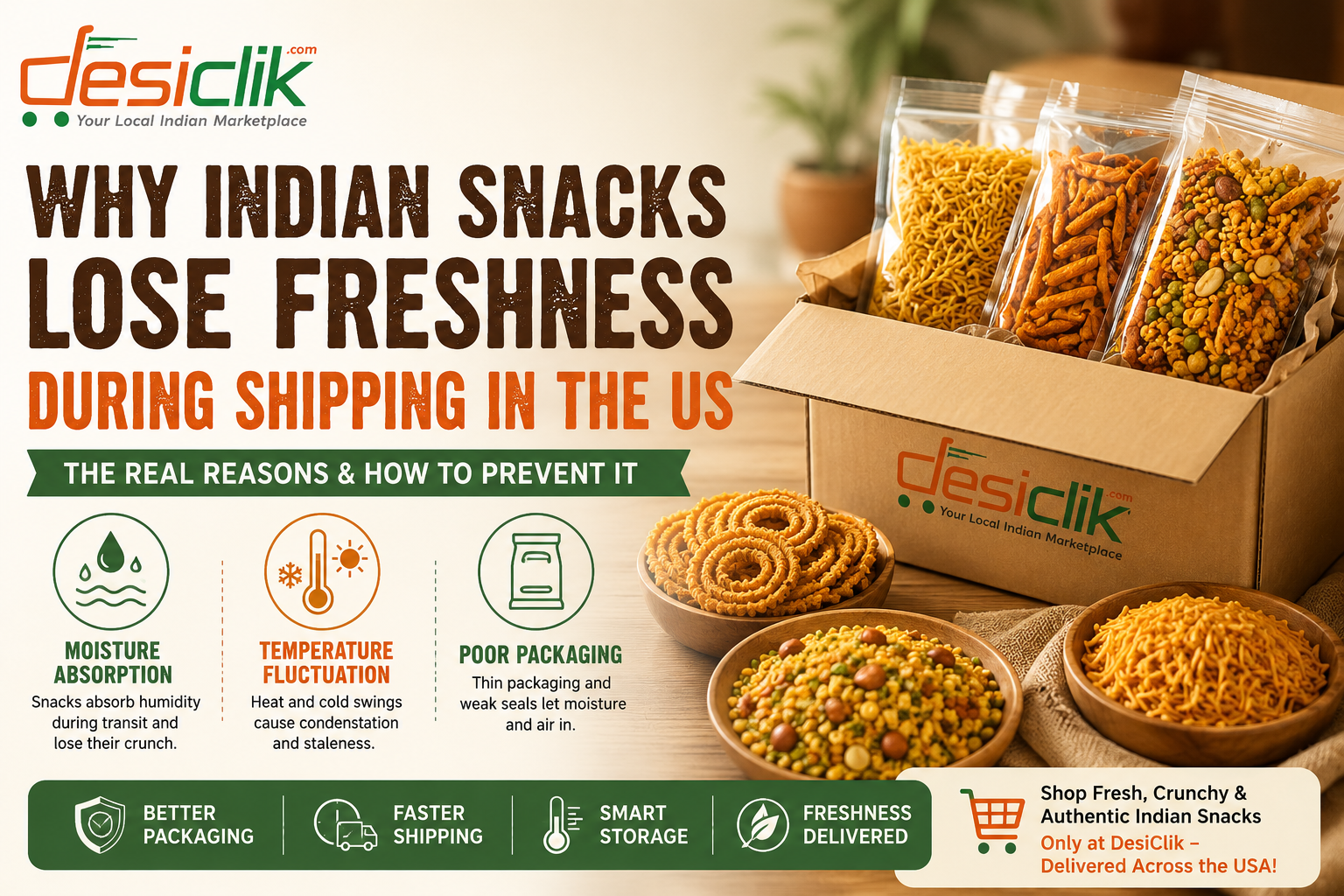
Indian snacks — namkeen, sev, chakli, mathri, mixture, and fried items in particular — are built around a specific texture: crisp, dry, and shelf-stable at room temperature. That texture is fragile in a way most people don’t think about until it’s gone. Three forces work against it during shipping:
1. Moisture Absorption
Fried and roasted snacks are hygroscopic, meaning they naturally absorb moisture from the air around them. Every time a package moves between a humid warehouse, a non-climate-controlled delivery truck, and a mailbox sitting outside in summer heat, that snack is pulling in a little more moisture — and losing crunch with every stage.
2. Temperature Fluctuation
A shipment traveling from a distribution center in one state to a home in another often passes through multiple temperature zones in a single week — a warm loading dock, a cold overnight truck, a hot delivery van in July. These swings cause condensation to form inside sealed packaging, which is often the real culprit behind “stale” snacks that were actually packed fresh.
3. Packaging Not Built for Long-Haul Shipping
This is where most packaging problems in snack shipping USA actually originate. A lot of snack packaging is designed for short local shelf life — a few weeks on a store shelf with regular air conditioning — not a multi-day journey through varying climates and multiple handling points. Thin plastic pouches, weak heat-seals, and packaging without a moisture barrier layer are the most common failure points.
How Shipping Distance Changes the Equation
India-to-US logistics aren’t the concern here — most reputable Indian snacks online USA sellers source and package domestically or import in bulk, then repack for individual orders. The real logistics challenge is the last-mile domestic journey: from a US-based warehouse to your front door.
- Short-distance orders (same state or neighboring states) typically arrive within 1–3 days, minimizing exposure to temperature and humidity shifts.
- Cross-country orders (East Coast to West Coast, for example) can spend 5–7 days in transit, often routed through multiple sorting facilities — each one an added opportunity for temperature exposure and rough handling.
- Seasonal timing matters — a package shipped in July through a non-climate-controlled truck faces very different conditions than the same package shipped in January.
This is exactly why the when and how far of a shipment matters just as much as what’s inside the box.
What Actually Prevents Freshness Loss
Not every seller handles this the same way, and the difference shows up the moment you open the bag. Based on what actually works across the Indian grocery and snacks shipping industry, a few practices consistently protect product quality:
Proper Barrier Packaging
Multi-layer pouches with a foil or metallized barrier keep both moisture and oxygen out far more effectively than single-layer plastic. This is the single biggest factor separating snacks that arrive crisp from snacks that arrive soft.
Nitrogen Flushing
Some manufacturers replace the oxygen inside a sealed snack bag with nitrogen gas before sealing. This slows oxidation — the process responsible for both staleness and rancid flavors in fried snacks — significantly extending how long a product stays fresh after it leaves the factory.
Heat-Sealed, Tamper-Evident Closures
A weak seal is one of the most overlooked packaging problems in snack shipping across the US. Even a barrier-grade pouch fails if the seal itself isn’t fully airtight, letting moisture creep in slowly during a multi-day shipment.
Smart Warehouse Practices
Storing inventory in a climate-controlled facility — rather than a standard storage unit exposed to seasonal heat and humidity — keeps products in better condition before they’re even packed for shipping.
Order-Based Packing (Not Pre-Packed Inventory)
Snacks packed fresh at the time of order, rather than sitting pre-packaged on a shelf for weeks, arrive noticeably fresher. This is a detail worth checking when choosing where to order from.
What You Can Do as a Buyer
Even with the best packaging, a few buyer-side habits make a real difference:
- Order during moderate weather when possible. Extreme summer heat or winter cold both stress packaging more than mild spring or fall conditions.
- Choose faster shipping options for perishable or fried items when available, even if it costs slightly more.
- Open and reseal snacks properly after opening — most staleness after delivery actually happens post-opening, not during transit, if the original seal was intact.
- Store snacks in a cool, dry pantry, not near a stove, window, or any heat source, once they arrive.
- Check for barrier packaging cues — foil-lined pouches or vacuum-sealed bags are a good sign a seller has thought through the shipping problem, not just the product itself.
Why This Matters More Than People Realize
Freshness complaints are one of the most common reasons customers stop reordering from an online Indian grocery store — and it’s rarely about the recipe or the brand of snack itself. It’s almost always a logistics and packaging issue, not a quality-of-ingredients issue. Sellers who invest in proper barrier packaging, climate-controlled storage, and smart shipping-route decisions consistently see fewer complaints and higher repeat orders, because the product actually performs the way it’s supposed to once it reaches the customer.
This is also why comparing sellers matters. Two stores can sell the exact same brand of bhujia, and one will consistently arrive fresher — not because of the snack, but because of everything that happened to it between the warehouse and your door.
DesiClik’s Approach to Snack Freshness
At DesiClik, snack freshness is treated as a packaging and logistics problem first, not just a sourcing one. Orders from the Indian snacks store are handled with attention to sealed, barrier-appropriate packaging and shipping timelines designed to minimize the number of days a product spends in transit — because the goal isn’t just delivering a snack, it’s delivering the same crunch and flavor you’d get buying it fresh off a shelf in India.
Frequently Asked Questions
1. Why do Indian snacks sometimes arrive soggy or stale after online shipping?
It’s usually caused by moisture absorption during transit, temperature fluctuations between warehouses and delivery vehicles, or packaging that lacks a proper moisture barrier — not a quality issue with the snack itself.
2. Does shipping distance affect how fresh snacks arrive?
Yes. Longer cross-country shipments spend more time in transit and pass through more handling points, increasing exposure to temperature and humidity changes compared to shorter, regional shipments.
3. What packaging actually keeps snacks fresh during shipping?
Multi-layer barrier pouches, nitrogen-flushed sealing, and strong heat-sealed closures are the most effective methods for protecting fried and roasted snacks during multi-day shipping.
4. Should I choose faster shipping for Indian snacks?
For fried or moisture-sensitive snacks, faster shipping options reduce the time packaging is exposed to temperature swings, which can help preserve texture and flavor.
5. How should I store Indian snacks after they’re delivered?
Store them in a cool, dry pantry away from heat sources, and reseal the packaging tightly after each use to prevent moisture from getting in.
Conclusion
Freshness problems with Indian snacks online USA almost always trace back to logistics — how far a package travels, how it’s packaged, and how it’s handled along the way — not the snack itself. Understanding these factors helps you make smarter choices about where and when you order, and what to look for in packaging before you hit “buy.”
Call-To-Action
Craving fresh, crunchy Indian snacks without the shipping disappointment? Shop the Indian Snacks Store at DesiClik for namkeen, bhujia, and mithai packed and shipped with freshness in mind — delivered across the USA.


