
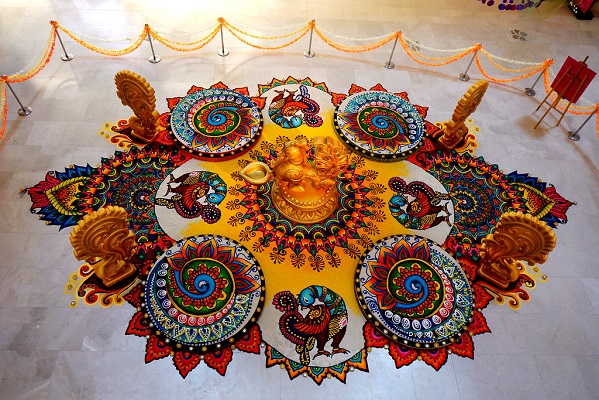
India, known for its vibrant culture, celebrates a plethora of festivals throughout the year. Each festival has its own significance and history, reflecting the diverse cultural tapestry of the country. Here is a calendar of major Indian festivals in 2024, along with a brief description of their importance and origins.
January 14 – Makar Sankranti
Significance: Makar Sankranti marks the transition of the sun into the zodiac sign of Capricorn. It signifies the end of winter and the beginning of longer days.
History: Celebrated with kite flying, bonfires, and feasts, Makar Sankranti has roots in ancient agrarian practices. It is a time for thanksgiving and is dedicated to the Sun God, Surya.
March 8 – Maha Shivaratri
Significance: Maha Shivaratri is dedicated to Lord Shiva. It is a night of fasting, prayer, and meditation. History: This festival commemorates the marriage of Shiva and Parvati. Devotees believe that worshipping Shiva on this night absolves past sins and leads to moksha (liberation).
March 25 – Holi
Significance: Holi, the festival of colors, celebrates the arrival of spring and the victory of good over evil. History: The legend of Holi revolves around Prahlad and Holika. Holika, a demoness, was burned in a fire while Prahlad, a devotee of Vishnu, was saved. This symbolizes the triumph of devotion and righteousness.
April 10 – Ram Navami
Significance: Ram Navami celebrates the birth of Lord Rama, the seventh incarnation of Vishnu.
History: This festival is observed with devotional singing and readings from the Ramayana. Rama’s life and deeds are commemorated, emphasizing dharma (duty) and righteousness.
April 14 – Baisakhi
Significance: Baisakhi marks the Punjabi New Year and the harvest festival.
History: In 1699, Guru Gobind Singh founded the Khalsa (Sikh community) on Baisakhi. This day is celebrated with processions, dances, and feasts, especially in Punjab.
August 19 – Raksha Bandhan
Significance: Raksha Bandhan celebrates the bond between brothers and sisters.
History: Sisters tie a rakhi (sacred thread) on their brothers’ wrists, symbolizing protection. The tradition is rooted in various legends, including those of Draupadi and Krishna, and Yama and Yamuna.
August 26 – Janmashtami
Significance: Janmashtami marks the birth of Lord Krishna, the eighth avatar of Vishnu.
History: Celebrations include singing, dancing, and reenactments of Krishna’s life. Temples are decorated, and devotees fast until midnight, the time of Krishna’s birth.
October 2 – Gandhi Jayanti
Significance: Gandhi Jayanti honors Mahatma Gandhi, the father of the nation.
History: This day marks Gandhi’s birthday and is a national holiday. It is observed with prayer services, commemorations, and discussions on non-violence and peace.
October 13 – Navratri
Significance: Navratri is a nine-night festival dedicated to the goddess Durga.
History: Celebrations include fasting, dance (Garba and Dandiya), and worship of Durga in her various forms. It symbolizes the victory of good over evil, as illustrated in the legend of Durga defeating the demon Mahishasura.
October 23 – Dussehra
Significance: Dussehra marks the victory of Lord Rama over the demon king Ravana.
History: Effigies of Ravana are burned, symbolizing the destruction of evil. This festival concludes the Navratri celebrations and emphasizes the importance of righteousness.
November 1 – Diwali
Significance: Diwali, the festival of lights, celebrates the return of Lord Rama to Ayodhya after 14 years of exile.
History: Homes are illuminated with lamps, fireworks are set off, and sweets are shared. It symbolizes the victory of light over darkness and knowledge over ignorance.
December 25 – Christmas
Significance: Christmas celebrates the birth of Jesus Christ.
History: Though a Christian festival, Christmas is widely celebrated in India with carols, decorations, and feasts. It promotes themes of love, joy, and giving.
These Indian festivals highlight the rich cultural and religious diversity of India, each with its own unique traditions and significance. Each festival is a great time to connect with family and friends and enjoy shopping of traditional Indian products.


